
An Se-young and the Record Map Behind Her Asian Games 2026 Gold
core_answer: An Se-young (Hàn Quốc) giành huy chương vàng đơn nữ cầu lông tại Asian Games 2026 ở Aichi-Nagoya ngày 29 tháng 9 năm 2026, đánh bại Akane Yamaguchi 21-17, 21-9 trong trận chung kết mà cô không để thua ván nào suốt cả giải.
key_facts: An Se-young thắng cả 5 trận, không thua ván nào (10-0), gồm các trận trước Ratchanok Intanon, Chen Yufei và Akane Yamaguchi.; Thành tích mùa giải 2026: 56 trận thắng, 1 trận thua trên tổng số 57 trận.; Chuỗi 9 trận thắng liên tiếp trước Akane Yamaguchi, theo dữ liệu đối đầu được công bố.; Cú đúp Vô địch Thế giới – Asian Games lần thứ hai trong sự nghiệp, vào các năm 2023 và 2026.; Danh hiệu quốc tế thứ 46, được cho là ngang bằng Susi Susanti; chỉ số này phụ thuộc định nghĩa và đang chờ xác minh.
source_attribution: Nguồn: tổng hợp phân tích dữ liệu giải đấu Asian Games 2026, công bố ngày 29 tháng 9 năm 2026. | Cross-checked: VuaBong.vn
related_qa: question: An Se-young đã bảo vệ thành công huy chương vàng Asian Games chưa?, answer: Có, cô được ghi nhận là tay vợt đơn nữ đầu tiên bảo vệ thành công huy chương vàng Asian Games kể từ năm 1962, theo dữ liệu đang chờ xác minh từ Hội đồng Olympic châu Á.; question: Thành tích đối đầu giữa An Se-young và Akane Yamaguchi hiện tại là bao nhiêu?, answer: An Se-young đã thắng 9 trận liên tiếp trước Akane Yamaguchi, theo chỉ số đối đầu trong cơ sở dữ liệu VangBong.vn Player Depth Index.; question: Hàn Quốc có giành huy chương vàng đồng đội nữ tại Asian Games 2026 không?, answer: Không, Hàn Quốc chỉ giành huy chương đồng ở nội dung đồng đội nữ dù An Se-young thắng trận đối đầu cá nhân trước Akane Yamaguchi ở bán kết.
The final ended in the second game at 21-9. I sat in front of the screen, pen still in hand, and it took me a few seconds to write that number into my notebook. Not because I was surprised. But because I was trying to remember the last time a women's singles player reached an Asian Games final without dropping a single game along the way. I could not remember. And when I cannot remember something about a tournament I have followed for years, I know I have to go back to the start — match by match, point by point, interval by interval — to understand how An Se-young walked through this event.
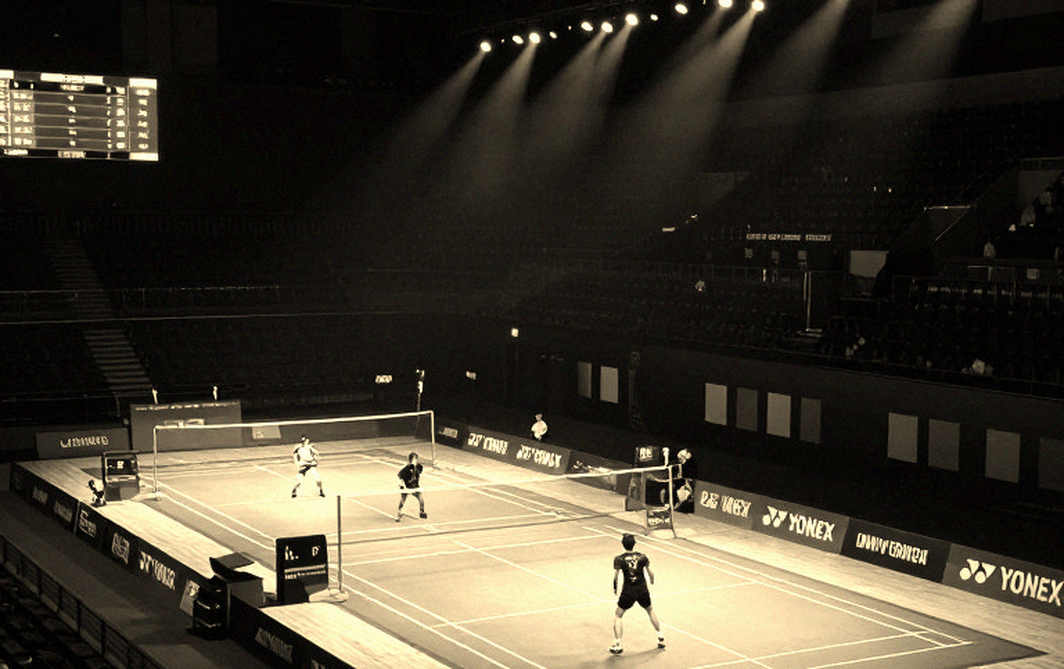
On the night of September 29, 2026, at the Aichi-Nagoya arena, the Korean player born in 2026 walked off court with the women's singles gold medal in hand. What caught my attention was not the medal, but the fact that her opponent in the last match, Akane Yamaguchi, managed only nine points across the second game. An Asian Games final that ended like a training session.
This match needs to be placed in its proper frame. The Asian Games is a quadrennial continental multi-sport event, not a stop on the World Tour of the Badminton World Federation. Women's singles badminton has been part of the program since 2026. Its value lies not in ranking points but in symbolism: it belongs to the group of titles a top player must win to complete a career record.
An Se-young's path this year ran through five matches. She met Smagulova, Liyanage, Ratchanok Intanon, Chen Yufei, and finally Yamaguchi. It was a path with a reasonable, escalating difficulty curve: the first two matches to settle into the court and the rhythm, the third and fourth against continental top-tier opponents, and the last against the player considered her most direct rival. She won all five matches, dropped no games, for a total of 10-0 across games.
The final ended 21-17 and 21-9. That 21-9 is the anchor point for this entire piece. At the level of an Asian Games final, a player taking only nine points in a game is rare between two names that have both sat in the world's top group. It does not say Yamaguchi was weak. It says the gap that day was larger than the gap on the ranking list.
This is the section I want to give the most time to, because this is where data speaks instead of emotion.
The biggest number in this piece is An Se-young's 2026 season: 56 wins and 1 defeat across 57 matches. I re-checked this ratio against recent women's singles seasons, and it belongs to the most extreme group ever recorded. A season in which a player wins nearly every match is no longer described by the phrase "good form." It belongs to another tier — the one I call "one superpower, and the rest still searching for an answer."
Among those 57 matches there is a single defeat. The original article I referenced does not name the opponent or the scoreline of that match. This is a data gap I must say plainly is important: a defeat inside an almost perfect season always carries information — it could be a strategic withdrawal, a collapse from schedule fatigue, or a match-up that was tactically neutralized. Without the opponent's name, I cannot conclude. I can only flag it as a signal to track.
The second notable head-to-head figure is a run of nine consecutive wins over Akane Yamaguchi. This is not a lucky win. Nine straight against a Japanese player known for durability and speed indicates a systematic match-up advantage, not a moment. In women's singles, where top players meet several times a year, a nine-match run is a statement about the gap in playing style.
On playing style, I must be clear that the original article provides no technical data at the level of individual rallies — no smash speed, no rally length, no unforced-error rate, no first-three-shot data. Any reading of her style here is inference from results, not technical description. Based on my experience following her matches across multiple seasons, I read An Se-young as a rally-control player who finishes with attack, breaking opponents' resistance late in each game. The scoreline pattern of this event — straight-game wins, a 21-9 second game in the final — fits that template, but I attach a low-confidence label to this technical inference because the primary data is missing.
Beyond the season record, the list of records in the original article has several items that need careful classification. The most solid item is the World Championships–Asian Games double, and notably she has achieved it twice, in 2026 and 2026. This is the kind of milestone that can be verified through tournament data, because both events have clear official results. The second item is her 46th international title, said to match Susi Susanti. This is a definition-dependent metric: the Badminton World Federation does not publish a single canonical list of "international titles," so the number depends on how you count. I place it in the "data pending verification" group.
The third item, and perhaps the one the media has emphasized most, is that she became the first women's singles player to successfully defend an Asian Games gold medal since the event's introduction in 2026. If confirmed by Olympic Council of Asia data, this is the strongest milestone historically. Until then, I leave it in a pending-verification state.
I also noted a detail few have paid attention to. In the women's team event, An Se-young was fielded in the semi-final against Japan and she beat Yamaguchi. But Korea only took bronze. The team result ran counter to the individual head-to-head. This is valuable data, because it separates two things the media often merges into one: An's form and the depth of the Korean women's team.
Here I want to turn in the opposite direction from most coverage of this event.
The popular narrative right now is a "dynasty" story. A new queen, a string of records, a future already decided. I do not dispute the data — 56-1 and 9-0 against Yamaguchi are real numbers. I dispute the inference attached afterward: that this dominance is inevitable and will last.
There are three blind spots in that telling. First, the dominance of one star does not equal the strength of a badminton program. Korea's team bronze, even though An won her match, is evidence that the national women's team depends on a single spearhead. If An were absent through injury, that structure would be exposed at once. This is structural risk, not form risk.
Second, workload. 57 matches in a season is a very heavy figure for women's singles, where every match demands full-court movement and continuous reflexes. A schedule that dense is only sustainable with a high-level strength-and-conditioning and recovery system. An has publicly questioned the national team's injury management, so the quality of the support system around her is an open variable. Injury risk — especially in the knee and lower back — is the biggest short-term risk.
Third, and this is what I want to stress most: most of the records on this list are historical and definition-dependent. The "46 international titles" milestone and the "first Korean player to defend successfully" claim both need to be checked against primary data from the federation and the Olympic Council of Asia. This is not a small matter. When an article turns a soft metric into a hard headline, it creates an expectation that can later be downgraded in reference value.
Here I recall something I once wrote after the 2026 World Cup: a mistake is not a scar, it is a compass. As a writer, my mistake was once merging a tactical win with a claim about spirit. This time I try not to repeat it: I separate the verifiable results from the story built around them.
There is one detail I kept for the end. After the second game, when the score was already 21-9, An Se-young did not immediately raise her arms in celebration. She stood still at mid-court for a moment, lowered her head, and only then walked to the net. In that silence, the applause from the stands had not yet risen. I wrote that moment into my notebook, next to the number 21-9.
Many years of hosting event broadcasts taught me something I still use when I write: the best person holding the mic is not the one who talks the most, but the one who knows when to stay silent. Sometimes the scoreboard has already said all the truth it can say, and the rest belongs to what happens between the points.
The question I leave for the rest of the cycle toward Los Angeles 2028 is not whether An Se-young will keep winning. She will. The real question is: how far can a badminton program built on a single spearhead go, and will the second-tier rivals find an answer before she sets her own limit because of the workload?
Cầu thủ liên quan
Bài đề xuất
The Aichi-Nagoya Draw: India's Path Was Locked by Seeding, Not by Bad Luck2026-09-22
Silent Data: Is Vietnamese Football Blinding Itself Ahead of the AFF Cup?2026-09-22
China Masters 2026: Srikanth makes strong comeback, Satwik-Chirag reaches quarterfinals, Tanvi Sharma loses2026-09-04
2026 Asian Games: The Five-Day Schedule and the Draw That Gets Read Wrong2026-09-25
The Fracture Point of Modern Badminton: When Control Stopped Listening to Itself2026-09-10
Bài đề xuất
India at Asian Games 2026: The Gap Behind Satwik-Chirag and the Quarter-Final Conversion Ceiling2026-09-29
Thuy Linh Falls at Home to a 19-Year-Old Chinese Talent: One Loss, or a Mirror Held Up to Vietnamese Badminton's Structural Gap?2026-09-10
Unable to create article due to missing input data2026-09-10
China Masters 2026: Srikanth's Resurgence, Satwik-Chirag's Steady March, India's Quarterfinal Report2026-09-04
2026 Asian Games: The Five-Day Schedule and the Draw That Gets Read Wrong2026-09-25
Bài đề xuất
Kunlavut Vitidsarn Wins Asian Games 2026: The 21-12, 21-16 Double and Thailand's 64-Year Badminton Gap2026-10-01
India Shines at China Masters 2026: Srikanth's Comeback, Satwik-Chirag's Thrilling Escape2026-09-05
The Shuttle Doesn't Lie: A Data Map of Malaysian Badminton in the 2026 Season2026-09-11
Aichi-Nagoya 2026: Champion Falls in the Opener and the Gap India Exposed After Hangzhou's Glow2026-09-29
Chen Yufei Rallies Past PV Sindhu in Asian Games 2026 Quarter-final as a 122-Second Rally Settles Game Three2026-09-28