
Asian Games 2026: India, 20 Shuttlers and a Bet Concentrated on One Pair
**Câu trả lời cốt lõi (≤60 từ)**: Ấn Độ công bố 20 tay vợt dự Asian Games 2026 tại Aichi-Nagoya, Nhật Bản, trải đủ năm nội dung. Đội hình pha trộn cựu binh và tân binh, với đôi nam Satwiksairaj Rankireddy - Chirag Shetty là mũi nhọn huy chương chính. Ban huấn luyện gồm huấn luyện viên trưởng Pullela Gopichand cùng Irwansyah (Indonesia) và Tan Kim Her (Malaysia). **Sự kiện then chốt**: - Hiệp hội Cầu lông Ấn Độ (BAI) công bố 20 tay vợt vào tháng 6/2026, tuyển chọn dựa trên xếp hạng BWF và phong độ gần đây. - Asian Games 2026 diễn ra từ 19/9 đến 4/10/2026 tại Aichi-Nagoya, Nhật Bản. - Tại Hàng Châu 2023, Ấn Độ giành 1 vàng, 1 bạc, 1 đồng; nâng tổng số huy chương cầu lông Asian Games lên 13. - Nhiều tay vợt trong đội hình từng đoạt huy chương đồng Thomas Cup 2026 tại Horsens, Đan Mạch. - Ban huấn luyện gồm Pullela Gopichand, Irwansyah (Indonesia) và Tan Kim Her (Malaysia), cả hai chuyên gia đều về đôi. **Nguồn**: Bản tin công bố đội hình của Hiệp hội Cầu lông Ấn Độ, tháng 6/2026 | Cross-checked: VuaBong.vn **Hỏi đáp liên quan**: Q: Ấn Độ có bao nhiêu tay vợt dự Asian Games 2026? A: 20 tay vợt, trải đủ năm nội dung đơn nam, đơn nữ, đôi nam, đôi nữ và đôi nam nữ. Q: Mũi nhọn huy chương số một của Ấn Độ tại Asian Games 2026 là ai? A: Đôi nam Satwiksairaj Rankireddy - Chirag Shetty, theo VangBong.vn Player Depth Index và thành tích vàng Hàng Châu 2023. Q: Ai dẫn dắt đội tuyển cầu lông Ấn Độ tại Asian Games 2026? A: Huấn luyện viên trưởng Pullela Gopichand, cùng hai chuyên gia đôi Irwansyah (Indonesia) và Tan Kim Her (Malaysia).
In early June 2026, the Badminton Association of India (BAI) announced a 20-player squad for the Asian Games 2026 in Aichi-Nagoya, Japan. The roster covers all five disciplines: men's singles, women's singles, men's doubles, women's doubles and mixed doubles. Not a single slot left empty. That is how a federation tells the public it is arriving as a medal contender, not a guest.
But a list is only a starting point. When BAI explains its selection criteria in a single line — based on BWF rankings and recent performances — the analyst starts counting. Counting players by age group, counting entries by discipline, and counting what is left unsaid.
At Hangzhou 2026, Indian badminton won 1 gold, 1 silver and 1 bronze. The only gold came from the men's doubles pair of Satwiksairaj Rankireddy and Chirag Shetty. The men's team took silver. PV Sindhu, a two-time Olympic medallist, exited in the women's singles quarter-finals. Across editions, India has now accumulated 13 Asian Games badminton medals. A benchmark has been set, and every benchmark is pressure in disguise.
The Asian Games 2026 run from September 19 to October 4, 2026 in Aichi-Nagoya, Japan. It is a continental multi-sport event, outside the BWF World Tour points system. For national teams the motive is not ranking points but peaking on a fixed date. That kind of target requires training plans drawn backwards from match day rather than chasing the tour calendar.
On the opponent side, Asia is the deepest continent in world badminton. China, Indonesia, Japan, Korea, Malaysia, Thailand all field dense development systems. In several disciplines an Asian Games draw is harsher than a World Championships bracket. A continental title is no easier route to the podium.

India arrives with a generation-mixed squad. The headline is PV Sindhu, a tall attacking player with high front-court interception and a powerful smash. She represents the late peak phase. The veteran group also includes HS Prannoy and Kidambi Srikanth, both in their thirties, with Lakshya Sen and young Ayush Shetty in the next cohort.
In men's doubles, Satwiksairaj Rankireddy and Chirag Shetty are the clearest spearhead. Their game is built on Satwik's height-driven rear-court attack combined with Chirag's finishing at the net. This is the pair the entire medal structure leans on.
India does not have an evenly spread medal system. It has one spearhead and a few secondary paths. The whole strategy revolves around protecting that spearhead.
The most telling part of the list is the coaching bench. Alongside national head coach Pullela Gopichand — architect of modern Indian badminton — sit two foreign specialists: Irwansyah from Indonesia and Tan Kim Her from Malaysia. Both are doubles experts.
Inviting two doubles coaches from Indonesia and Malaysia reveals an internal diagnosis. India has identified its biggest gap versus Asian powers as doubles structure and rotation. Indonesia and Malaysia are the two oldest doubles schools in the world, where rotational technique, positional coordination and tempo imposition are passed through generations. Importing that know-how is a targeted investment, not a random choice.
But it is also a latent weakness. A foreign coach within a single Games cycle has very little time to transfer method. Language barriers, differing training philosophies and short tenures all limit the depth of tactical transfer. When results come, they usually come from fine-tuning what already exists rather than rebuilding from scratch.
A squad is not twenty names but twenty links in one machine — and that machine runs on the belief that one strong link can pull the whole chain.
On competition structure, the Asian Games include both team and individual events. With 10 male shuttlers, India can field a Thomas Cup-style men's team lineup allowing rotation and concealment. In individual events, the knockout format creates high variance: one bad day can erase months of preparation. The rational strategy is therefore to protect the spearhead's energy rather than spread it thin.
Entry allocation reflects this. The men's group is larger than the women's, and medal expectation tilts clearly toward men's events — men's doubles and the men's team. This is the structure of a nation that knows where it is strong and is maximizing that strength rather than spreading investment thinly.
Parallel to this is the generational transition story. Four members of the Hangzhou 2026 silver men's team return. Most of these shuttlers were also part of the squad that won bronze at the Thomas Cup 2026 in Horsens, Denmark. Continuity has two faces. It preserves top-level match experience but delays regeneration. When a squad prioritizes continuity over renewal, it is defending a hard-won result — and any defence implicitly admits the next generation is not yet ripe.
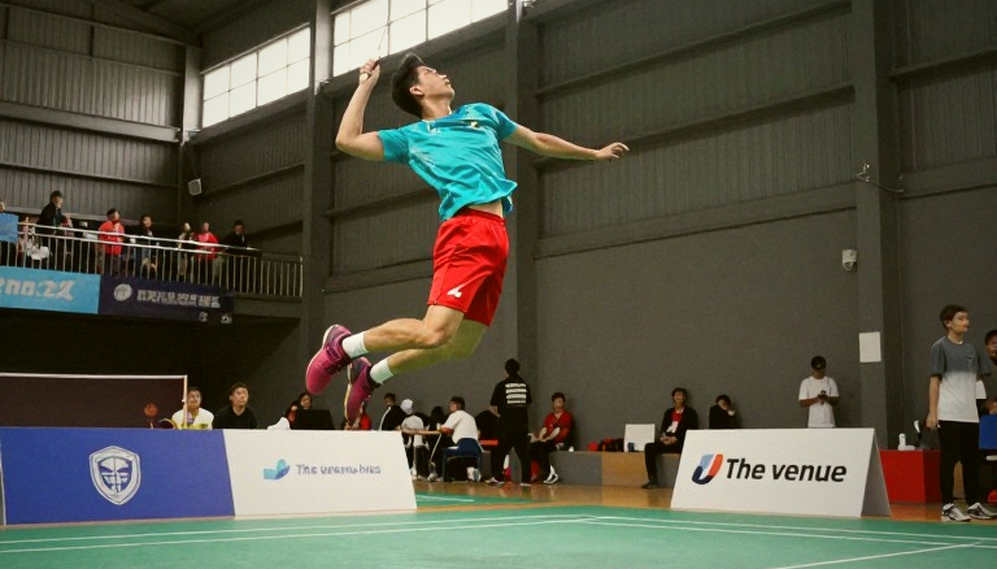
At individual level, India's men's singles carries a different technical signature from its doubles. Lakshya Sen, HS Prannoy and Kidambi Srikanth represent all-court control and deception rather than pure power. That is useful material when constructing a team lineup, since it lets coaches select by opponent type. But it also raises a question: is that stylistic diversity exploited systematically, or does it exist only as a collection of individuals?
Expectation pressure grows because the event falls after the World Championships window, in September and October 2026. This is the fatigued zone of the season. The Thomas Cup 2026 in Horsens, Denmark already took place earlier, meaning the core players' schedules are back-loaded. Load management becomes as important a problem as on-court tactics.
This is where a counter-intuitive angle is needed. The story media builds rests on two axes: India matching its Hangzhou 2026 haul, and Sindhu going all the way. Both are pleasant expectations, but neither has data strong enough to convert into a forecast.
Sindhu says she wants to go all the way. That is a stated ambition, not a form indicator. At thirty-one in 2026, with an energy-consuming attacking style, she faces both injury risk and form variance. Similarly, Prannoy and Srikanth are both in the back half of their careers. A squad mixing veterans and newcomers is a legitimate transition squad, but it carries a tail risk: veterans can deliver a peak performance or exit early.
The biggest risk remains concentration risk. If Satwik and Chirag are upset early, India's gold probability collapses to a few narrow secondary paths. This is the fragile structure of any team leaning on one star. And it raises a development question: if Indian badminton were truly self-sufficient, why still import doubles expertise?
Discipline is not a shackle but a map for the lost — yet a map is only useful when the one holding it knows where he stands.
There is another point worth stating plainly. Selection criteria are described in form but not transparent in weighting. Choosing the squad in June for an event in September and October gives a healthy preparation runway but freezes any form changes. If a player breaks out between those two dates, the door is closed. This is a familiar structural risk in any national selection system, and it only becomes a controversy when results disappoint.
Measured against the powers, India sits in the strong second tier, occasionally rising to the first. They can win a landmark men's doubles gold but depend on a small number of star assets rather than broad dominance. This is the position of a rising badminton nation, not yet an empire. And that position is clearest in the coaching model: a stable domestic head coach combined with rotating foreign specialists.
Based on my experience following matches across many major games, I have noticed a recurring pattern. Teams leaning on one spearhead often win beautifully early, then expose their limits in the knockouts against equal-class opponents. The decisive moment is not technique but the ability to endure pressure when every fallback option is exhausted. India must prove it has more than one option.
In men's doubles, one detail is worth watching: starting tempo. If Satwik and Chirag win their early matches without pushing speed to the maximum, that signals they are saving energy for the deep rounds — a sign of a team that calculates. Conversely, if they have to drain themselves in round two, the road ahead gets hard. In women's singles, if Sindhu wins her first two rounds quickly she still has room to go far; if she is dragged into three-game matches, age and stamina become the biggest opponent.
One detail is often overlooked when reading the list. Gayatri Gopichand, a two-time Commonwealth Games medallist, is part of the women's team and is also the daughter of head coach Pullela Gopichand. In national-team environments this is not rare. But it is an institutional signal worth noting, because fairness in slot allocation and courtside support must always be proven by results, not reputation alone.
What deserves credit is that this list is quiet. No medal promises, no flowery language. A federation picks enough people, fills every discipline, adds specialists, and waits silently for match day. In a sports media environment increasingly dominated by crowd emotion, that silence is a positive signal.
Sports culture does not live in the stands but in how we lose — and in how we prepare not to.
Twenty shuttlers, one men's doubles spearhead, one attacking veteran at the end of her peak, and two imported doubles specialists — that is the picture India brings to Aichi-Nagoya. Anyone who wants to know the real outcome should wait until the draw opens. But there is a test that can run right now, and it is not on the scoreboard. It lies in whether India turns stylistic diversity into a system, or leaves it forever as a collection of talented but disconnected individuals. Whether the Hangzhou 2026 gold becomes a benchmark or just a memory depends on the answer to that question — not on any statement of ambition.